

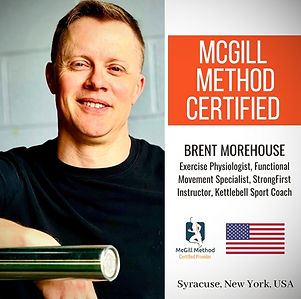
Brent Morehouse, M.S.
Exercise Physiologist
McGill Method Certified Practitioner
Level-1 Neurodynamics Practitioner
Brent Morehouse, M.S., is a McGill Method Certified Practitioner specializing in mechanical assessment and non-medical coaching for chronic and recurrent low-back pain, concordant leg and foot symptoms.
His practice is supported by more than 25 years of helping active individuals and athletes recover from recurrent injuries, persistent pain, and prolonged limitations in physical performance
Connect With Us
Connect a patient with us
Contact Us
In This Section
Post-Surgical / Post-Rehabilitation
Meet Brent (clinically-centered)
Downloads
Brent Morehouse is the founder of Pain to Performance, a McGill Method Certified Practitioner, and a Neurodynamics Practitioner whose practice focuses on chronic and recurrent mechanically based low-back pain and related neuro-mechanosensitive presentations. His work includes individuals with concordant leg and foot symptoms, recurring flare-ups, imaging findings that require additional mechanical context, pre-surgical gray-zone presentations, and medically appropriate individuals rebuilding after spine surgery or formal rehabilitation.
Brent holds a bachelor’s degree in Kinesiology from Penn State University and a master’s degree in Exercise Physiology form East Stroudsburg University. Since 2013 he has studied directly from Professor Stuart McGill and completed the McGill Method certification process through the BackFit Pro faculty in 2024. His continuing education also includes Clinical Neurodynamics Systems directly under Michael Shacklock, which informs the assessment of leg and foot symptoms when neural mechanosensitivity may contribute to the presentation.
His path into spine-focused practice developed from over 25 years of specialized work with active individuals and athletes experiencing chronic joint pain, recurrent injuries, and repeated difficulty returning to training or sport. Rather than working primarily with uninjured athletes seeking conventional performance enhancement, Brent’s practice became known for helping physically active people rebuild movement, strength, confidence, and athletic durability after standard recovery pathways had not produced a successful return to activity. That experience created the foundation for his current work at the intersection of mechanical low-back assessment, rehabilitation continuity, and return to physical demand.
The Pain to Performance assessment is founded on the McGill Method which examines how the individual’s symptoms respond to spine motion, posture, load, and accumulated exposure to daily activities that eventually trigger symptoms. Depending on the presentation, the process may also evaluate lifting and movement strategies, positions of respite, neurological or neurodynamic behavior, current physical tolerance, and MRI findings when available and considered within the broader mechanical presentation. The objective is to identify modifiable variables, establish what the individual can currently tolerate, and translate those findings into an individualized plan of education, spine-sparing movement, exposure management, corrective exercise, and staged return to work, fitness, recreation, or sport.
The cases Brent manages commonly extend beyond a straightforward exercise prescription. They may involve a high-functioning person with recurrent mechanically triggered flare-ups, an individual whose symptom burden is not clearly reflected by imaging alone, chronic leg symptoms with a neurodynamic component, a patient remaining between conservative care and surgical escalation, or a post-surgical individual who has completed rehabilitation but still requires a defined bridge to greater physical demands.
Pain to Performance is a self-pay, non-medical assessment, education, and coaching service. Brent does not issue medical diagnoses, direct medical or surgical treatment, provide radiologic interpretation, or replace physician-directed care or physical therapy. His role is to contribute detailed mechanical and functional information, provide an organized plan within the appropriate pathway, and communicate relevant findings or concerns to the individual’s medical and rehabilitation professionals.